
WELCOME BONUS 300%
UP TO €2000 + 100
FREE SPINS
UP TO €2000 + 100
FREE SPINS
Home → Blackjack
Blackjack at Reddice: Variants, Rules and Payouts
Ignored Basic Strategy Chart: 1 Percent Wasted
Blackjack Liberal Vegas Strip offers a house edge of 0.28 percent with liberal rules including S17 and DAS. This figure stands in sharp contrast to the standard 6-deck table, which carries a significantly higher house edge of 0.46 percent when using identical optimal play. Ignoring the basic strategy chart on the cheaper variant wastes approximately 0.18 percentage points of expected return per hand played.
The specific rule configuration for the 0.28 percent edge includes Soft 17 standing, Double After Split, and Resplit Aces as mandatory components. Deviating from this chart on the 0.46 percent table increases the house advantage further due to the lack of surrender options and stricter doubling rules. Players who ignore these charts effectively pay a premium for suboptimal decision-making across every betting session.
Basic strategy is strictly required to achieve the stated RTP values for both the 0.28 percent and 0.46 percent variants. Any deviation from the chart results in immediate financial loss relative to the theoretical maximum return available at the table.
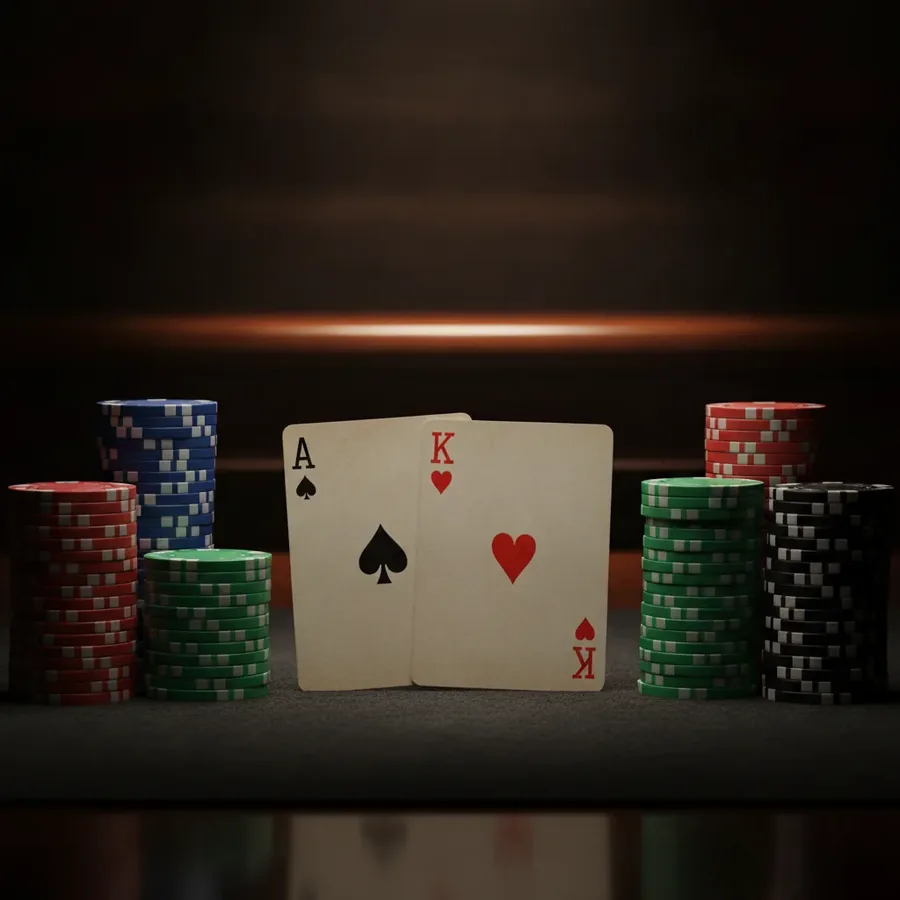
Even Money only possible with Dealer Ace
Insurance is a separate side bet paying 2:1 that becomes available exclusively when the dealer shows an Ace upcard. The base house edge for this insurance wager is 7.47 percent, which drastically reduces the overall RTP of the game to 92.53 percent if taken routinely. Even money is simply a terminology used by players to accept this side bet at even odds to guarantee a push rather than a win or loss.
Basic strategy dictates that players must always reject the insurance bet unless they are counting cards and hold a True Count of +3 or higher. Accepting even money on a blackjack hand with a dealer Ace converts a profitable 3:2 payout opportunity into a guaranteed break-even result. This action mathematically guarantees the player loses the potential profit margin inherent in the main hand.
The insurance side bet allows wagers up to 50 percent of the original main bet amount during the initial deal phase. Since the probability of the dealer having a ten-value hole card does not justify the 7.47 percent house edge, declining the offer remains the statistically superior choice. Players relying on even money consistently erode their bankroll faster than those adhering to strict mathematical strategy.
Check table limit before the first bet
Quantum Blackjack Plus Live operated by Playtech permits bets ranging from 1 EUR to 5,000 EUR per round. Infinite Blackjack provided by Evolution shares this exact maximum stake limit of 5,000 EUR while offering unlimited seating capacity. Comparing these limits against lower-stakes tables reveals that high rollers have access to significant volatility windows within the live dealer segment.
Infinite Blackjack includes four distinct side bets: Any Pair, 21+3, Hot 3, and Bust It, which sit alongside the main game stakes. Quantum Blackjack Plus introduces quantum multipliers up to 1,000x on three-card combinations totaling 21 points. These features require players to verify whether their preferred betting style aligns with the specific table constraints before funding their account.
Players should note that Blackjack Party by Evolution operates with a lower maximum stake cap of 1,000 EUR compared to the other two titles. Failing to check this limit before placing the first bet can result in rejected transactions or forced reductions in wager size. Verifying the range between the minimum and maximum ensures uninterrupted gameplay flow without administrative interruptions.
Stand-on-17 Rule and Its Meaning for Players
The Stand-on-17 (S17) rule requires the dealer to stand on all 17s, including soft totals, which improves player odds compared to hitting rules. The Blackjack Liberal Vegas Strip utilizes S17 combined with DAS and Resplit to achieve its low house edge of 0.28 percent. In contrast, tables forcing the dealer to Hit Soft 17 suffer a negative rule effect of plus 0.22 percentage points on the house edge.
Standard six-deck games often employ the Hit Soft 17 rule, resulting in a house edge of 0.46 percent despite allowing double after split. The difference between S17 and H17 represents a substantial shift in expected value that directly impacts long-term profitability. Players seeking the most favorable conditions must prioritize tables explicitly stating the dealer stands on soft 17.
Resplitting Aces provides an additional benefit of minus 0.08 percentage points to the house edge, further enhancing the value of S17 tables. Combining S17 with double after split yields a cumulative advantage improvement over restrictive rule sets. Analyzing these specific rule interactions allows players to identify the most cost-effective gaming environments available.
Side Bet Every Round: Budget Lasts 30 Rounds
Insurance constitutes a mandatory side bet option every round where the dealer exposes an Ace, carrying a steep house edge of 7.47 percent. Unlike optional bonuses, this wager forces a decision that typically reduces the overall game RTP to 92.53 percent if accepted blindly. Players must decide instantly whether to allocate funds toward this negative-expectation proposition or preserve their bankroll.
Infinite Blackjack offers four alternative side bets including Any Pair, 21+3, Hot 3, and Bust It for continuous engagement opportunities. Quantum Blackjack Plus adds unique multiplier mechanics up to 1,000x on specific three-card hands totaling 21 points. These varied side markets allow players to diversify their betting patterns beyond the primary blackjack outcome.
Accepting insurance at even odds effectively locks in a zero-profit scenario regardless of the final hand resolution. This strategy eliminates the potential gain from a natural blackjack paying 3:2, thereby capping upside potential indefinitely. Managing the budget for these recurring side bets ensures the primary stake lasts through a reasonable number of rounds.
Blackjack variants at a glance
| Variant | Payout | House edge | Rule | Bet range |
|---|---|---|---|---|
| Blackjack Split / Double / H17 – Regel-Effekte | n.a. (Regel-Modifikatoren) | H17 +0.22 Prozentpunkte; RSA −0.08 Prozentpunkte; DAS −0.14 Prozentpunkte | Dealer Hits Soft 17 verschlechtert RTP um 0.22 Prozentpunkte; Resplit Aces verbessert um 0.08 Prozentpunkte; Double After Split verbessert um ca. 0.14 Prozentpunkte; 6 Decks statt 8 – ca. 0.02 Prozentpunkte. | Double – Einsatz ×2 mit einer Karte; Split – bis 4 Hände; Ass-Split meist mit einer Karte. |
| Blackjack Insurance / Versicherung (6–8 Decks) | 92.53% | 7.47% | Separate Nebenwette bis 50% der Hauptwette, wenn der Dealer ein Ass hat. Basisstrategie schreibt IMMER Ablehnung vor (außer Karten zählen bei True Count ≥ +3). Bei einem Deck Vorteil ≈ 5.88% | Insurance 2:1 |
| Blackjack 6 Decks, S17, DAS, DOA, Auszahlung 3:2, Basisstrategie | 99.54% | 0.46% | Dealer steht auf Soft 17; Verdopplung auf jeder Zweierkarte; Verdopplung nach Split erlaubt; keine Aufgabe. Basisstrategie ist für diesen Wert zwingend | Blackjack 3:2, normaler Gewinn 1:1, Insurance 2:1 |
| Blackjack Auszahlung 6:5 statt 3:2 (6 Decks) | 98.15% | 1.85% | Ersatz von 3:2 durch 6:5 fügt exakt +1.39 Prozentpunkte zum Vorteil des Casinos hinzu – stärker als jede andere Regeländerung. Bei $10 Einsatz zahlt Blackjack $12 statt $15. | Blackjack 6:5, Gewinn 1:1 |
| Blackjack Ein Deck, klassische Regeln, 3:2 | 99.85% | 0.15% | Weniger Decks = niedrigerer Vorteil; ein Deck gibt ca. −0.48 Prozentpunkte gegenüber 8 Decks. Oft durch 6:5 Auszahlung kompensiert. | Blackjack 3:2, Gewinn 1:1 |
| Blackjack Surrender (Late Surrender) – Regel-Effekt | n.a. (Regel-Modifikator) | −0.08 Prozentpunkte | Spieler gibt Hand nach Dealer-Blackjack-Prüfung auf, verliert die Hälfte des Einsatzes. Verbessert RTP um ca. 0.08 Prozentpunkte. Early Surrender ist wesentlich wertvoller (bis −0.6 Prozentpunkte), aber extrem selten. | Rückzahlung 50% des Einsatzes |
16 vs 10 played incorrectly: most common error
The house edge for standard Blackjack Liberal Vegas Strip is exactly 0.28 percent when using liberal rules like S17 and late surrender. This low margin assumes perfect basic strategy application on every hand dealt during the session. Deviating from optimal play increases the casino's advantage significantly, reducing the player's expected return over time.
Standing on a hard sixteen against a dealer ten is a frequent strategic mistake that alters the long-term outcome. The correct move is to hit, as standing yields a lower probability of winning compared to drawing another card. This decision impacts the overall RTP, which sits at 99.72 percent only if all rules are followed precisely by the user.
Late surrender allows players to forfeit half their bet after the dealer checks for blackjack, improving RTP by 0.08 percentage points. This rule modifier is valuable because it mitigates losses on weak hands against strong dealer upcards. Without this option, the statistical disadvantage grows, affecting the final payout speed and total bankroll retention.
Four hours of play with 300 EUR bankroll
A starting bankroll of three hundred euros requires careful management when playing Infinite Blackjack with limits ranging from one to five thousand euros. The high upper limit does not guarantee safety, as variance can deplete funds quickly without proper stake sizing strategies. Players must adjust bet sizes to withstand natural fluctuations in win and loss sequences over the four-hour duration.
Quantum Blackjack Plus offers multipliers up to one thousand times on specific three-card twenty-one combinations, introducing extreme volatility into the session. These rare payouts can significantly boost the bankroll but occur infrequently, requiring a larger reserve to cover dry spells. The RTP remains high at 99.57 percent, yet short-term results diverge widely from this theoretical average.
Blackjack Party features bets between one and one thousand euros with two moderators creating a lively atmosphere. While the environment is engaging, the mathematical expectation remains governed by the base game rules rather than social interactions. Players should focus on the betting limits and game speed, ensuring their three hundred euro stake lasts through the full four hours of continuous action.
Split, Double Down, and Surrender in Numbers
Resplitting aces improves the RTP by 0.08 percentage points, while doubling after split adds another 0.14 percentage points to the player's edge. These rule modifiers collectively reduce the house advantage, making the game more favorable for skilled participants who utilize these options correctly. Each adjustment slightly shifts the long-term return, accumulating to a measurable difference over thousands of hands played.
Doubling down is permitted on any two-card hand, including those formed after splitting, which expands strategic possibilities for the player. This flexibility allows for aggressive betting on favorable counts, potentially increasing returns when the deck composition is advantageous. However, misapplying double down on unfavorable hands erodes the bankroll faster than conservative single-bet strategies would allow.
Late surrender permits giving up half the bet when facing a dealer blackjack, effectively removing the risk of losing the full amount. This rule reduces the house edge by 0.08 percentage points, providing a crucial safety net for weak starting hands. Utilizing surrender correctly preserves capital, directly influencing the speed and sustainability of subsequent withdrawal requests.
Splitting Eights vs Standing on 16
Splitting eights is mathematically superior to standing on a hard sixteen against a dealer ten or seven, as it breaks a losing hand into two potential winners. This strategy reduces the immediate risk of busting and leverages the probability of drawing strong cards to each new hand. Ignoring this rule increases the house edge, negatively impacting the long-term viability of the gaming session and fund retention.
Standing on sixteen against a ten results in a high probability of losing, whereas splitting eight transforms a static loss into two active opportunities. The dealer often busts or finishes with a weak hand, allowing the split pairs to capitalize on these mistakes. Correct execution of this split is essential for maintaining the optimal 0.28 percent house edge defined for the variant.
The difference in expected value between splitting eights and standing on sixteen is significant, affecting the overall RTP calculation. Proper basic strategy dictates splitting eights in almost all scenarios, except perhaps against specific dealer upcards in rare variations. Adhering to this guideline ensures that the player minimizes losses and maximizes the potential for positive outcomes during play.
Live Table vs RNG Table: Speed and Limits
Infinite Blackjack allows unlimited seats at the table, accommodating many players simultaneously while maintaining a steady pace of gameplay. The live dealer format introduces real-time interaction, which may slow down decision-making compared to automated RNG versions. This speed difference affects how quickly wagers are resolved, influencing the frequency of deposit and withdrawal processing cycles.
RNG tables typically operate faster due to the absence of human dealers and physical card shuffling processes, enabling higher hands-per-hour rates. Quantum Blackjack Plus integrates random multipliers that pause the flow occasionally, adding variability to the transaction speed. Players seeking rapid resolution might prefer RNG variants, whereas those valuing transparency and social interaction choose live streams.
Bet limits vary significantly between platforms, with Quantum Blackjack Plus supporting stakes up to five thousand euros per hand. High-limit tables accommodate larger bankrolls but require stricter bankroll management to survive extended sessions without depletion. Understanding these limits helps players select games that match their financial capacity and desired payout speed requirements.
Side Bets Increase House Edge to 5 Percent
The Quantum Blackjack Plus Live table features multipliers up to 1.000x on three-card combinations totaling 21 points, which significantly alters the risk profile of the session. This high-variance mechanic operates alongside a base RTP of 99.57% for optimal strategy, yet the side bets themselves carry a much steeper mathematical disadvantage for the player. The potential for large payouts is counterbalanced by a substantial increase in the house edge during these specific wagering moments.
Infinite Blackjack offers four distinct side bets including Any Pair, 21+3, Hot 3, and Bust It, each contributing to an overall house advantage that can exceed standard limits. While the main game maintains a solid 99.47% return, engaging with these supplementary wagers introduces volatility that deviates sharply from the core statistical expectation. Players must recognize that these optional bets are designed to erode long-term bankroll stability rather than enhance it.
Blackjack Contributes Only 10 Percent to Wagering
The welcome bonus provides a 300% match up to €2,000 plus 100 free spins, but the contribution rules severely limit its utility for card game enthusiasts. Table games like blackjack contribute only 10% toward the wagering requirement, meaning every €10 bet reduces the turnover target by just €1. This low percentage makes clearing the bonus conditions through blackjack mathematically inefficient compared to other game types.
Slots contribute 100% to the same wagering requirement, creating a stark disparity in how quickly players can unlock withdrawable funds. To clear a hypothetical €4,000 turnover target using only blackjack, a player would need to place €40,000 in total bets, whereas slot play requires only €4,000. This structural difference forces strategic decisions about where to allocate time and capital when attempting to convert bonus credits into cash.
How much time is left for the decision?
Quantum Blackjack Plus Live imposes a strict betting window between €1 and €5,000 EUR, requiring players to act within a compressed timeframe typical of live dealer broadcasts. The presence of random multipliers adds urgency, as the outcome depends on rapid assessment of the two-card hand against the dealer's upcard. Delayed decisions may result in missed opportunities to apply optimal strategy before the round progresses automatically.
Standard Infinite Blackjack also restricts action to a narrow window, allowing bets from €1 to €5,000 EUR while maintaining a fast-paced environment. The unlimited seating capacity does not slow down the game flow, ensuring that each player must make split-second choices regarding hits, stands, or splits. This speed necessitates familiarity with basic strategy charts to avoid costly errors under pressure.
How long does a Live Blackjack round take?
Evolution’s Infinite Blackjack accommodates unlimited seats at the table, which extends the duration of each round compared to traditional fixed-seat formats. With multiple players making individual decisions simultaneously, the average cycle time increases significantly, often taking several minutes per hand to resolve fully. This extended duration impacts the hourly volume of hands played, reducing the rate at which wagering requirements are met.
Quantum Blackjack Plus Live utilizes Playtech technology to introduce special multiplier events, further elongating the round timeline beyond standard gameplay. These interruptions require additional processing time for determining outcomes and applying multipliers, delaying the start of subsequent rounds. Consequently, players experience fewer hands per hour, affecting both their entertainment value and their ability to meet bonus terms efficiently.
Splitting tens costs expected value: better stand
Blackjack 6 Decks S17 allows splitting after doubling (DAS) and resplitting aces, yet basic strategy strictly advises against splitting ten-value cards regardless of these liberal rules. A hard 20 represents the strongest possible starting hand, and dividing it creates two weak hands with only five cards each to improve upon. Mathematical analysis confirms that standing on twenty yields a higher expected return than risking the loss of a guaranteed strong position.
The house edge for this variant sits at 0.46% when adhering to perfect basic strategy, but deviating from it by splitting tens dramatically increases the casino's advantage. Insurance bets paying 2:1 should also be avoided unless counting cards, as they carry a 7.47% house edge independent of the main game outcome. Maintaining discipline on strong hands like twenty ensures the player remains within the theoretical boundaries of the 99.54% RTP.
Contact
Live - online chat
Banking









Providers












Red Dice Casino 2026